Young's Modulus is a the measure of elasticity and stiffness of multiple materials such as bronze, concrete, nylon and other materials. It is meant to characterize diffrent materials depending on what their strain level is. How this is going to relate to our project is that we our testing concrete bunnies under a stress and elastic test and see how the concrete reacts.
Elastic- The ability to return to the starting size when deformed or streched
Plastic- The ability to be shaped or formed
Yield Point- The stress at which an elastic material under increasing stress ceases to behave
elastically
Ultimate Strength- The maximum tensile stress that a material can withstand before rupture
 Arcosanti is a experimental city built in Phoenix, Arizona that was designed to be architecture and ecology incorporated. Designed by famous architecture Paolo Solari. It was built on 25 acres of land and uses arcology, a method that is used to use the full potential of the land while minmalizing the impact on Earth.


 It would sound blunt and messed up if I said "We are testing the strength of bunnies"! So to clarify, I mean we are about to test concrete bunnies under weights to test their breaking points. This test is meant to see if our concrete mixture is optimal and can beat out others. This test consist of taking the molds of the chocolate bunnies and put concrete in them to let them harden into a concrete bunny. Now there is a catch. We are making bunnies that have nothing in them, ones that have nylon cotton in them, ones that have metal wire in them, and ones with fiberglass mesh. This is to see if these variables affect the failure point of the concrete. We have not tested the bunnies yet. When we get back from spring break, I will update results from the test and elaborate on how it went.
As of right now, the new project we alumni are getting our hands on is concrete. Now before I get into detail, let me explain what concrete is. A common misconception is that concrete and cement are the same, which is undoubtedly false. Cement is a chemical binder that holds all the components of concrete together. It is usually made from limestone. Concrete is a composite material made with three specific things: Aggregate, Cement, and Water. Aggregate is basically a construction stew composted of sand, gravel, crushed stone, slag, recycled concrete and some geosynthetic aggregates. Concrete is the most used man made material in the world. Tonnes and tonnes are used yearly by companies around the world. What makes concrete so popular is that its extremely cheap, water resistant, fire resistant, shock resistant, erosion resistant, widely available, very strong, and long lasting(I'm talking centuries long lasting). It's also one of the oldest construction material; used since the Ancient Roman years.
OK. Now that you got some knowledge on that, lets progress to denizen. I don't know what our project is going to be just yet. Once I find out, I'll update the blog. Currently we were just finishing two things. A concrete mixture test and a concrete slump test. Te concrete mixture test was a trial and error test to see what mixtures of concrete were the best when we put them to the test in the strength test. We let the mixtures harden and dropped them from a specific height. We would record the amount of damage the concrete sustained. If the concrete was damaged badly, there was too little water. If there was little to no damage, the concrete had a good mixture. After we found out our optimum formulas, we go to the slump tests. Concrete slump tests are test made for freshly made concrete to test their flexibility and strength. There are three types of slump out comes: Collapse, Shear, and True Slump. A collapse is self explanatory. The whole slump, which the concrete is placed in called a slump core, falls apart into a pile of gelatinous goop. A shear is when the slump maintains part of its shape, but one side collapsed or sunk in. A true slump is the optimum slump. It is when the slump keeps its shape but sinks slightly, buckling the middle to cause it to sink at least 1/3 of its size. This is an important step because our mixtures must achieve a true slump in order for the concrete to be optimal.
 Currently, we just finished our slump test and strength test. Now we move onto the phase we our currently in; Strength test II. But now its a twist. Previously, we each got our own chocolate bunnies(which was delicious by the way J.A) that we ate and took the plastic moldings they came in. Today, well yesterday, we sprayed the moldings with PAM to prevent sticking and poured in concrete with two different compositions. The normal one had just concrete. Nothing more. Nothing less. The experimental one had nylon fibers placed into it to see if that will improve the structural integrity of the concrete. We will make more bunnies then put them into a stress test to see when the bunnies will crack at what weight. Personally, I believe this is fun. And i believe it can only get better.

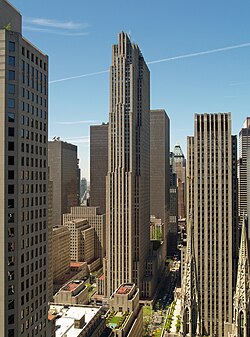
My idea of a field trip is the Rockefeller Center. Rockefeller Tower is a feat in itself. Built by the the richest family known to man, The Rockefeller Family, the tower is a interesting feat of engineering and it has a garden on top of it. Look at it. Do you see this? It's just such a aesthetically appealing that it should at least be considered. I mean what other building will you see around NYC with a garden on top of the building? That itself is a engineering feat in its self. Considering it took nine years to build and it takes up 22 acres of land, there is no way to run out of things to admire. It also has an underground area full of resturants and shopping centers. There are many centers where great feats of engineering have been built, like the murals in the GE Building Lobby. It may just seem like an ordinary building, but it is in fact a great landmark that should at least be considered.


 On the top, you can see three pictures of the finished project. This is a Veneer Lamp. Its design was specifically meant to look like an ordinary box. However, when you turn off the lights, the box will illuminate. This gives it an odd seductiveness to it. I can't say why. It just does. Anyhow, its core purpose is aesthetics and deceptiveness. I think it is a good project. It took awhile to do, but I think it came out quite well in my opinion. Even when I cut the frame wrong, it still came out great. (Some came out horrible, but that's a story for another day). Challenges I had to overcome was the frame not being flush with the veneer wood. This can be seen in a previous post with the picture of the lamp frame. To overcome this problem, I took strips of Balsa wood and glued it to the frame. This made the frame match to the corners of the wood, and flush. So with this problem out the way, I could glue the veneer to the frame, which turned out very squared. My option before this was to rebuild the whole frame, but I insisted on finishing what I started. What are you, crazy? You think I'm gonna spend 2 days rebuilding this thing?! No way. The nonchalant is the ambiance of cause. I put effort into this project. I wanted to see it through, and I did. So I think that this was a great project overall. Not many problems, like the scrap box...
 The most recent project we have been working on is an end table veneer lamp. This lamp is being made by each student. The dimensions of the lamps measure 5 1/2 x 5 1/2. It weighs about 6 ounces and is perfectly squared.As you can see in the pictures below, we have the disassembled lamp frame, the lamp frame in progress of being glued together, the finished frame, and the veneer being cut and the finished pieces of the 4 foot veneer piece. In all honestly, I seem to take pride in this exquisite project not because of how I cut it, but the planning and process of going through the measurements seemed to give me a good feeling. Now, these lamps are technically meant for aesthetics rather than light. It is a good project and I can't wait to see what the end result is.